Israel Election Results: Netanyahu Bloc on 54 Seats With 84% Counted, Still Short of Majority
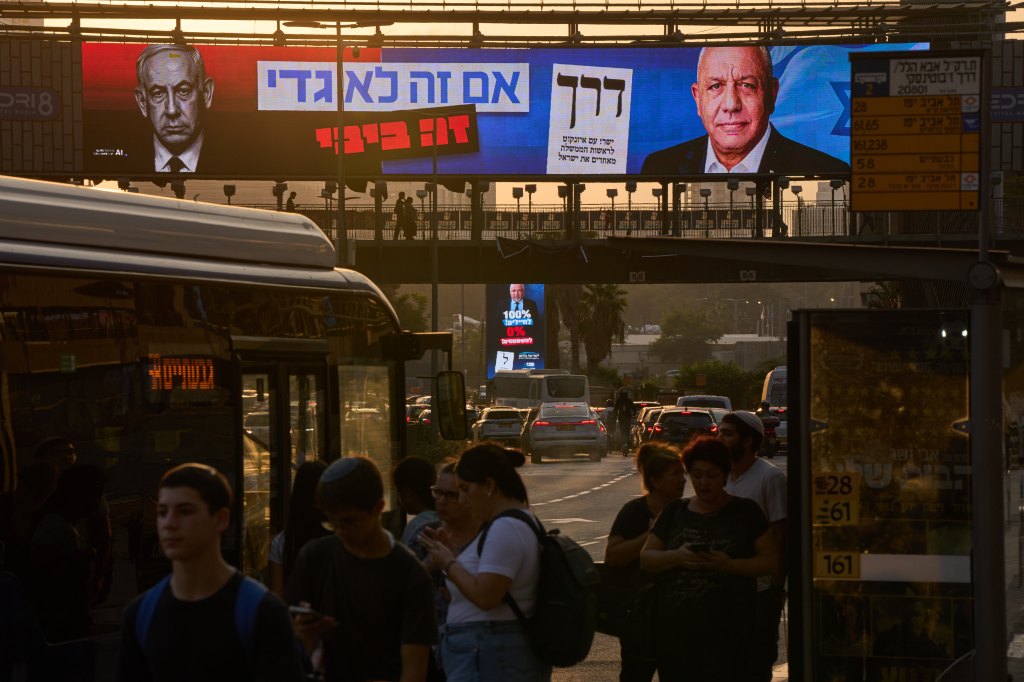
Photo: AP via The Indian Express
Prime Minister Benjamin Netanyahu's bloc still leads Israel's election count with most votes tallied, but it remains short of a majority, leaving Israel facing weeks of coalition talks or possibly another election.
With 84.5 percent of ballot boxes counted, Netanyahu's bloc stood on 54 seats in the 120-seat Knesset, while the opposition bloc led by former military chief Gadi Eisenkot stood on 49 seats and Arab-led parties on 17 seats, according to partial results from Israel's Central Elections Committee. A government needs 61 seats to command a majority.
Main News Report
The count moves the story on from Tuesday night's exit polls, which PakInsight Hub reported in its earlier exit polls post. Those polls put the two blocs close to level, with Kan 11 and Channel 13 projecting a 51-51 tie and Channel 12 giving Netanyahu's Likud-led bloc a narrow 52-49 edge.
The counted votes have shifted the picture in small steps since then. At 51.8 percent counted, Netanyahu's bloc led 55-49 with 16 seats for the Arab parties. At two-thirds counted, the split was 54-48-18. Now, with 84.5 percent counted, it is 54-49-17. Netanyahu's bloc is seven seats short of 61, Eisenkot's bloc is 12 short, and neither side can govern alone on these numbers.
The Times of Israel reports that three smaller parties sit below the 3.25 percent threshold: Reservists on 2.7 percent, People of Israel on 1.6 percent and Charedi Public on 0.2 percent. Votes cast in double envelopes, including those of soldiers, are counted later, so the final numbers can still move.
- Votes counted so far: 84.5 percent
- Netanyahu bloc: 54 seats, seven short of a majority
- Eisenkot opposition bloc: 49 seats, 12 short of a majority
- Arab-led parties: 17 seats, up from 10 in the outgoing parliament
- Seats needed for a majority: 61 out of 120
- Turnout: 77.7 percent, the highest since 1999
Background Context
This was Israel's first election since the Hamas attacks of 7 October 2023, and voters were passing judgement on Netanyahu, Israel's longest-serving prime minister, after three years of war and deep division at home. Eisenkot, a 66-year-old former military chief and political newcomer, led the main opposition challenge.
Israel's voting system almost never hands one party a majority on its own. Parties win seats in proportion to their votes, so governments are built from coalitions, and when no coalition reaches 61 seats, the country can be stuck. Between 2019 and 2022 Israel went to the polls five times for exactly this reason.
Once results are final, the president consults party leaders and picks the candidate most likely to build a majority. That candidate gets 28 days to negotiate, with a possible 14 extra days. If that fails, another candidate gets a chance, and if no one succeeds, Israel must hold another election.
Reactions and Statements
Both leaders vowed on Wednesday to form the next government, and neither claimed victory. Eisenkot told supporters in Tel Aviv that the public had delivered a vote of no confidence in Netanyahu and urged the longtime prime minister to retire from politics. He said voters had rejected divisive leadership and warned Netanyahu against using national security for political ends while the government question was open.
Netanyahu, speaking to supporters, called for a strong right-wing government and raised the prospect of renewed military action against Iran alongside United States President Donald Trump. Trump himself claimed on Wednesday that his endorsement of Netanyahu had helped "a lot".
The Arab-led parties are the key to the maths but not, so far, to a deal. On the latest figures, Eisenkot's bloc plus the Arab parties would reach 66 seats, enough for a majority. But both Netanyahu and Eisenkot ruled out governing with Arab lawmakers during the campaign. One voice broke ranks: Yair Golan, head of the main left-wing party in Eisenkot's camp, called on Wednesday for a government of change formed in partnership with Israel's Arab citizens, saying the old division between Jewish votes and Arab votes must end.
Why This News Matters
For Israelis, the count decides who leads the country out of war and through its aftermath, and a long coalition fight means a caretaker government stays in charge in the meantime. Netanyahu could remain in office as caretaker while talks drag on.
For the wider region, the result shapes what comes next on Gaza, on Iran and on relations with Arab states. A government that depends on hard-right parties will act differently from one that leans on the centre and on Arab support, and the world is watching which way the final numbers push Israel.
For readers following the count itself, the lesson of the day is how much early numbers move. The exit polls suggested a tie, the first counted votes gave Netanyahu a 55-49 lead, and the count has since settled around 54-49-17. The last votes, including soldiers' ballots, could still nudge a seat or two either way.
PakInsight Hub's earlier coverage includes the Syria Jordan border reopening, the Houthi claim of a strike on Saudi Arabia's Ras Tanura refinery and Russia's strikes on Kyiv's South Bridge, all stories where early figures moved as counting and confirmation went on.
Future Developments
Counting continues, and full results are expected by Thursday evening or Friday morning, according to CNA, carrying an AFP report. The 54-49-17 split should be read as a snapshot, not a result.
When the final results land, the president's consultations will start, and the real bargaining begins: which smaller parties join which bloc, what price they demand, and whether the Arab parties stay outside or lend support from outside a coalition. If no side can reach 61, Israel faces the prospect of yet another election.
Sources
The Times of Israel: With 84% of ballots counted, pro-Netanyahu bloc at 54 seats, Eisenkot-led bloc at 49, Arab parties at 17
CNA (AFP): Netanyahu bloc leads after half of Israeli votes counted but no majority
Malay Mail (Reuters): Netanyahu bloc leads Israeli election count but falls short of majority
#Israel #IsraelElection #Netanyahu #Eisenkot #MiddleEast #BreakingNews #WorldNews


Comments
Post a Comment