Israel Election Results 2026: Exit Polls Show No Clear Winner as Netanyahu and Eisenkot Fall Short of Majority
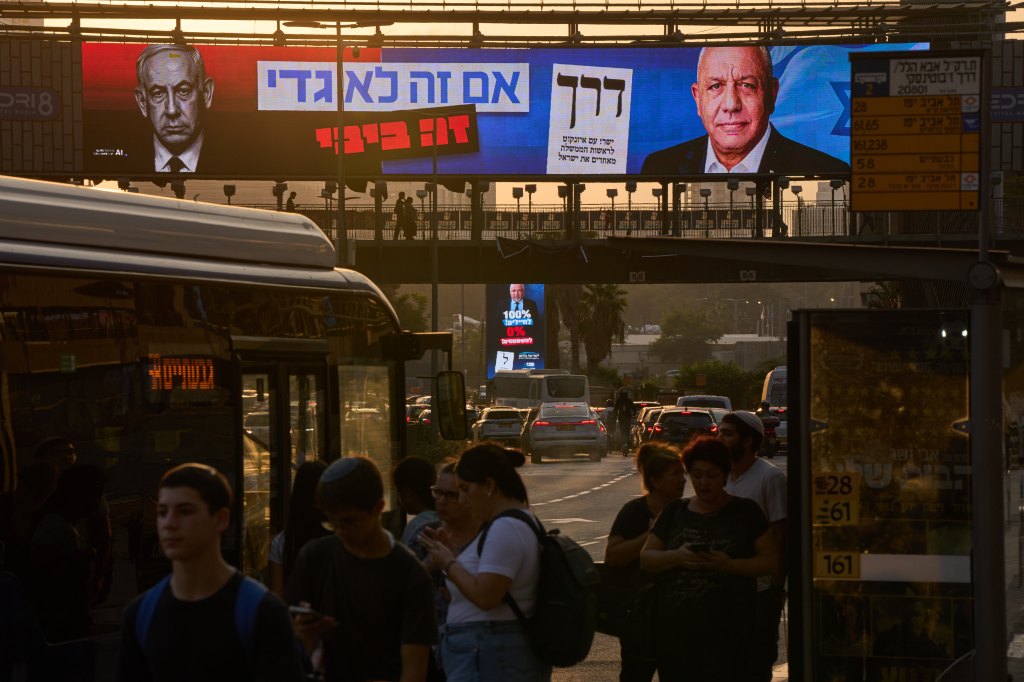
Photo: AP via The Indian Express
Israel election results 2026 point to a hung parliament, with exit polls showing neither Prime Minister Benjamin Netanyahu nor his challenger Gadi Eisenkot reaching the 61 seats needed for a majority in the 120 seat Knesset. Three of the five main exit polls put the opposition bloc ahead, two put Netanyahu ahead, and the Arab parties look set to win 17 to 18 seats, which could leave them holding the balance.
Main News Report
Israel voted on Tuesday 27 October in its first national election since the Hamas led attack of 7 October 2023. Polls closed at 10 pm Israel time, which was 1 am Pakistan time on Wednesday, and the main TV stations then published their exit polls. The Indian Express reported that no bloc reaches 61 in any of the five polls.
The numbers differ by channel, which is why the night ended in argument rather than a clear result. Kan 11, Channel 12 and Channel 13 all put the anti-Netanyahu bloc ahead, at 53, 52 and 53 seats, against 50 for the Netanyahu bloc. Channel 14 put Netanyahu ahead at 60 seats to 43, just one short of a majority, and i24NEWS put him ahead at 55 to 49. In every poll, Netanyahu's Likud is still the biggest single party, with 24 to 30 seats, ahead of Eisenkot's Yashar party at 19 to 23.
Turnout was high. The Central Elections Committee put it at 77.7 percent when polls closed, the highest at that hour since 1999, USA Today reported, citing the Associated Press. Exit polls are projections, not the official count, and the final figures can still move, especially once double envelope ballots from soldiers and others away from home are counted on 29 October.
Netanyahu has since called for a right wing government, Al Jazeera reported in its updated live coverage, while Eisenkot said the result showed a complete lack of confidence in Netanyahu. Both men are now counting the same seats and reaching different answers.
Background Context
This was a vote on Netanyahu's long rule as much as on any single policy. He has been prime minister for most of the past 17 years, and this election was the first since the wars that followed the 2023 attack. Many voters treated it as a verdict on his leadership through those wars.
The maths of Israeli politics makes a hung result normal. No single party has ever won 61 seats on its own, so governments are always coalitions. The president meets every party leader after the count and asks the person most likely to command a majority to try to form a government. That person gets up to six weeks, and if they fail, others get a turn. Talks can run for weeks or even months.
Netanyahu's current coalition held 68 seats before this vote. Yohanan Plesner, head of the Israel Democracy Institute, told the AP the coalition looks set to fall to about 50, and that Netanyahu has no realistic path to a majority with the current parties. That fall, if the final count confirms it, is the story of the night even before anyone forms a government.
Reactions and Statements
Eisenkot, a former military chief, said the result marked a victory for his side. "If these are the final results, they would mark a victory," he said in a statement carried by the New York Post. Fellow opposition leader Yair Lapid went further, calling it a total collapse for Netanyahu. "Netanyahu's bloc suffered a tough defeat," Lapid said. "This is a total collapse and the public told them to go home."
Lapid also said the side with more votes had both the ability and the duty to form a government, and he spoke of forming what he called a Zionist government, starting narrow and widening later. He praised his political partner, former prime minister Naftali Bennett, whose B'Yachad party is projected at 11 to 14 seats.
On the other side, Foreign Minister Gideon Sa'ar said a clear Jewish majority appeared to be emerging from the results, and wrote on X that the night had only just begun. That points to the fight ahead over the revised exit polls, with Channel 12 later projecting Netanyahu's bloc at 52 seats against 49 for Eisenkot's side.
The Arab parties, projected at 17 to 18 seats, could end up deciding who governs. Ra'am cheered the exit polls, and the AP said the party could become a kingmaker. Leading opposition figures have vowed not to work with Arab led parties, but Israeli politicians have reversed such pledges before, and the numbers may leave little choice.
Why This News Matters
Israel sits at the centre of the Middle East tensions that have shaped fuel prices, shipping and diplomacy for Pakistan and the wider region. A government that cannot form quickly, or one that depends on fragile deals, affects ceasefire talks, Gaza reconstruction and the wider Iran file. Pakistan has joined recent talks with Saudi Arabia, Turkey and Iran on stopping a wider Middle East war, as covered in our Tehran talks report, and a long coalition wrangle in Jerusalem will feed into all of those talks.
The key figures in one place:
- 61 seats needed for a majority in the 120 seat Knesset, reached by no bloc in any exit poll.
- 50 to 60 seats for the Netanyahu bloc across the five exit polls, down from 68.
- 43 to 53 seats for the anti-Netanyahu bloc, depending on the channel.
- 17 to 18 seats for the Arab parties, up sharply and possibly decisive.
- 77.7 percent turnout when polls closed, the highest at that hour since 1999.
- 24 to 30 seats for Likud, still the biggest single party in every poll.
For readers, the plain point is this. Israel has voted, but it has not yet chosen a government. The exit polls tell us the old coalition lost ground and no new one is ready. The next few days of counting, and then weeks of talks, will decide what comes next.
Future Developments
The first thing to watch is the official count. Preliminary results were due from Wednesday, and double envelope ballots are counted on 29 October. Those ballots can still shift a seat or two, and in a race this tight, one seat can change who gets the first chance to form a government.
Then comes President Isaac Herzog's round of meetings with party leaders. Whoever he asks first gets up to six weeks. If that attempt fails, others get a turn. Avigdor Liberman, head of Yisrael Beytenu, said the picture will be much clearer later this week, once more votes are counted.
Watch too for the far right's fate. Itamar Ben-Gvir's Otzma Yehudit is projected at about six or seven seats, down from the 14 it won together with the Religious Zionist party last time. How those parties bargain, and whether the Arab parties are brought into talks despite earlier pledges, will shape the final coalition.
Related coverage includes our report on Washington ruling out an Iran strike and our JI Islamabad march report.
Sources
- The Indian Express: Israel Election Results 2026 live updates, exit polls by Kan 11, Channel 12, Channel 13, Channel 14 and i24NEWS
- Al Jazeera: Israel election results live, Netanyahu calls for a right wing government
- USA Today (AP): Israel's election ends in apparent deadlock, exit polls show
- New York Post: Netanyahu loses seats, trails challenger Gadi Eisenkot in Israel election, exit polls show
#World #WorldNews #BreakingNews #Israel #IsraelElection #Netanyahu #Eisenkot


Comments
Post a Comment