Pakistan Takes Over G-24 Chairmanship as Aurangzeb Sets Out Plan for Fairer Global Finance
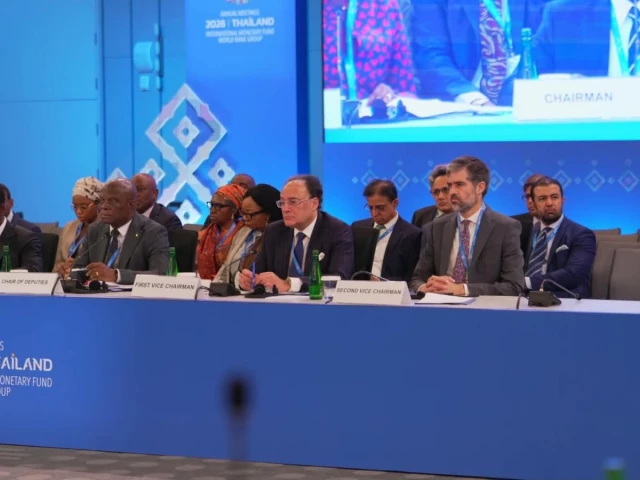
Photo: Ministry of Finance via Express Tribune
Pakistan has taken over the G-24 chairmanship, with Finance Minister Muhammad Aurangzeb promising to strengthen the collective voice of developing economies and push for a fairer, more responsive global financial system.
Main News Report
Pakistan assumed the chairmanship of the Intergovernmental Group of Twenty-Four (G-24) on Sunday, succeeding Nigeria at the head of the bloc of developing countries. The G-24, set up in 1971, coordinates the positions of developing economies on international money and finance issues, above all in dealings with the International Monetary Fund (IMF) and the World Bank.
According to a Ministry of Finance handout reported by Dawn, Aurangzeb described the chairmanship as a profound responsibility. He called for renewed international cooperation, stronger multilateral institutions and firm global commitments to deal with climate shocks, development financing gaps and global economic fragmentation.
"The future of developing economies is not peripheral to the future of the global economy. It is central to it," the finance minister said.
Pakistan's Three Priorities as G-24 Chair
Aurangzeb set out three strategic priorities for Pakistan's term in the chair:
- Placing development at the centre of global economic policymaking.
- Strengthening multilateral frameworks, meaning the shared rules and institutions countries use to manage the world economy.
- Advancing a development-oriented international financial architecture, so lending, debt and aid rules give growing economies a fair chance.
He said financial stability should be aligned with long-term development goals, drawing on Pakistan's own recent experience with economic stabilisation, reform and resilience. Reforming economies, he added, must have the financing and policy space they need to grow in a lasting way.
Pakistan's tenure would be guided by the G-24's longstanding principles of consultation, consensus and collective advocacy, working with members across Africa, Asia, Latin America and the Caribbean, alongside the IMF, World Bank and other partners, to turn shared priorities into practical outcomes. He thanked outgoing chair Nigeria and said collective leadership must be judged by tangible outcomes. "The true measure of our collective leadership will not simply be the strength of our voice, but the difference that voice makes," he said.
Background Context
The G-24 chairmanship lands at a busy moment for Pakistan's economic diplomacy. Islamabad is working through an IMF programme, seeking fairer climate finance after repeated flood shocks, and asking lenders for debt treatment that does not crush growth. At home, the strain is visible in everyday numbers, from the latest diesel price to a stock market that fell 784 points on 30 October as investors stayed nervous.
For readers, the plain meaning is this: the G-24 chair gives Pakistan the pen when developing countries draft their common position before big IMF and World Bank meetings. It does not bring money by itself, but it shapes the arguments about who gets financing, on what terms, and how climate losses are counted.
Reactions and Statements
President Asif Ali Zardari hailed Pakistan's assumption of the G-24 chairmanship and congratulated Aurangzeb and his team, calling it an important opportunity for effective representation of developing countries in global economic affairs.
Prime Minister Shehbaz Sharif called it a significant milestone. He expressed hope that it would provide Pakistan "an opportunity to play an influential role in advocating for necessary reforms within the global financial system, securing equitable financial support to address climate change and promoting sustainable development opportunities for emerging economies". The Express Tribune reported that the prime minister also praised the finance team's proactive role during the recent annual meetings of the IMF and World Bank.
Why This News Matters
- Pakistan now leads the main bloc that negotiates for developing countries at the IMF and World Bank, a real lift for its economic diplomacy.
- The agenda Aurangzeb set, fairer lending, debt space and climate finance, matches the exact pressures Pakistan faces at home.
- Global economic decisions are being watched closely after moves such as US growth of 3.4 percent in the third quarter, which shape the rates and flows smaller economies depend on.
Future Developments
Pakistan will chair G-24 meetings through its term, including the group's sessions around the IMF and World Bank gatherings. The test will be practical: whether the bloc can win concrete changes on debt relief, climate finance and voting power for developing countries, rather than statements alone. Aurangzeb has promised to build on Nigeria's work and to move the group, in his words, "from collective voice to collective influence, and from collective influence to meaningful progress".
Sources
- Dawn, Pakistan becomes chair of G-24 bloc
- Express Tribune, Pakistan assumes G-24 chairmanship
- APP via UrduPoint, Pakistan assumes G-24 chairmanship
#Pakistan #PakistanNews #Economy #G24 #Aurangzeb #IMF #WorldBank


Comments
Post a Comment