Khawaja Asif and Mohsin Naqvi Hit Back at Fazlur Rehman Over Tehran Meeting
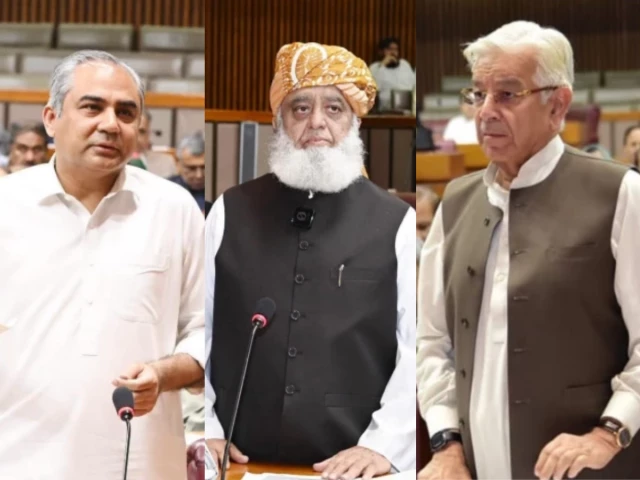
Photo: The Express Tribune
Defence Minister Khawaja Asif and Interior Minister Mohsin Naqvi have hit back at JUI-F chief Maulana Fazlur Rehman in parliament, saying the Tehran meeting he criticised was not about a defence deal at all.
The row broke out in the National Assembly on Thursday, a day after Fazl questioned why Asif was not in Tehran while Naqvi was there. Asif told the house the talks were about regional peace, not defence, so his presence was not needed. Naqvi, speaking in the Senate the same day, said he had lost respect for Fazl after the JUI-F chief's remarks about the state.
Main News Report
Asif was blunt in the National Assembly. He said no defence pact was taking shape in Tehran and the talks did not cover Pakistan's defence or any matter under his ministry. That, he said, was why he stayed in Islamabad. He added that describing the meeting as a defence negotiation was a misreading of the facts.
He then turned on Fazl's own record. Asif recalled that Fazl had held posts of influence under past governments and had chaired the National Assembly's Kashmir Committee for about a decade. He asked what Fazl could point to for the Kashmir cause from that time. He also accused the JUI-F of using religion for political and financial gain, and questioned why the PTI had made Fazl its patron.
The speech sparked protests from JUI-F members in the house. Aliya Kamran pointed to a lack of quorum, and PTI and JUI-F members walked out as counting began, but Deputy Speaker Syed Ghulam Murtaza Shah ruled that enough members were present and Asif carried on.
In the Senate, Naqvi was just as direct. He said he had held heartfelt respect for Fazl, but that respect ended when Fazl said, in Wednesday's National Assembly session, that he spat on the state. Naqvi said he went to Tehran on a special task from Prime Minister Shehbaz Sharif linked to the current crisis, not on a defence deal, and not because he liked travelling abroad.
Naqvi accused Fazl of changing his stance based on whether his party had a share in government. He said the state was treated as a mother only while benefits kept flowing, and was attacked once the share stopped. His words set off slogans from opposition benches, and JUI-F parliamentary leader Senator Kamran Murtaza objected that Naqvi was using the house for a personal agenda. Presiding Officer Shahadat Awan ruled that Naqvi, as a member, had the right to speak, and ordered objectionable words struck from the record.
Background Context
The row goes back to a meeting in Tehran that brought together top officials from Iran and countries in the Makkah defence pact. Pakistan was represented by Chief of Defence Forces and Chief of Army Staff Field Marshal Asim Munir, alongside Saudi Defence Minister Prince Khalid bin Salman and Turkish intelligence chief Ibrahim Kalin. Naqvi was also present.
On Wednesday, Fazl raised the meeting in the National Assembly and asked why the defence minister was sitting in Islamabad while a defence pact was, in his words, taking shape in Iran. He also questioned why the interior minister was needed there. His remarks drew laughter and desk thumping in the house at the time.
This is not the first clash between Fazl and the government this week. Fazl had already accused the government of misusing the Constitution over governor's rule in Khyber Pakhtunkhwa, a charge covered in PakInsight Hub's earlier report on Fazl's KP criticism. The KP fight is still live in parliament too, with the PTI standing by Sohail Afridi as KP chief minister and the Election Commission ordering local polls in 17 KP districts.
Timeline of the row:
- Wednesday: Fazl questions Asif's absence and Naqvi's presence at the Tehran meeting in the National Assembly.
- Thursday: Asif replies in the National Assembly, saying the meeting was about regional peace, not defence.
- Thursday: Naqvi replies in the Senate, saying he went on a special task from the prime minister and that he has lost respect for Fazl.
- Thursday: JUI-F members protest in both houses, and the Senate presiding officer orders objectionable words removed from the record.
Reactions and Statements
Asif, in the National Assembly: "No defence agreement was being negotiated in Tehran. I was not needed there, because the talks were not the defence ministry's mandate."
Naqvi, in the Senate: "I personally had heartfelt respect for Maulana Fazlur Rehman, but yesterday when he said, 'I spit on the state', that respect ended. I went in connection with the current crisis on a special task given by the prime minister."
JUI-F leader Maulana Abdul Ghafoor Haideri hit back in the National Assembly, accusing the government of leaning on military backing instead of building up democratic institutions. PML-N lawmaker Hanif Abbasi also joined the attack, accusing Fazl and opposition leader Mehmood Khan Achakzai of siding with anti-state elements.
The Express Tribune's account notes the same sequence: Asif explaining his absence, Naqvi denying a defence deal, and uproar in both houses. ARY News reports Naqvi warning that the government will answer firmly to remarks he sees as crossing a line.
Why This News Matters
For ordinary readers, the row matters for a simple reason: it shows what the Tehran meeting was and was not. If a defence pact were being signed in secret, that would affect Pakistan's foreign ties and its defence commitments. Both ministers now say on the record, in parliament, that no such pact was on the table. That puts the claim to rest unless new facts emerge.
It also matters because of who is fighting. Fazl leads a party with real street power and a long record in coalition politics, while Asif and Naqvi speak for the government. When that fight turns personal, with talk of lost respect and religion used for gain, it makes compromise harder on other issues too, from KP to the budget. Parliament works best when its members can disagree without breaking trust, and this week that trust took a hit.
Finally, the row sits inside a wider regional picture. Pakistan is trying to keep ties with Iran, Saudi Arabia and Turkiye at the same time, while a war next door shapes every meeting. A public fight over who went to Tehran and why can cloud that balancing act, which is why both sides chose parliament, in full view, to make their case.
Future Developments
Three things to watch next. First, whether Fazl answers in the National Assembly in the coming session, and whether he softens or sharpens his line on Tehran. Second, whether the government gives parliament any fuller briefing on what was agreed in Tehran, which would settle the defence pact question for good. Third, whether the JUI-F's protest over KP governor's rule joins up with this row, turning two separate fights into one wider opposition campaign.
For now, the government's position is clear and on the record: the Tehran meeting was about easing a regional crisis, not signing a defence deal, and the ministers who went there did so on the prime minister's orders.
Sources
- Dawn: Ministers return fire after Fazl's NA tirade
- Dawn: Not related to defence, govt responds to Fazl's remarks about Makkah pact countries' meeting in Tehran
- The Express Tribune: Khawaja Asif hits back at Fazlur Rehman over Tehran remarks
- ARY News: Fazlur Rehman has crossed the line, warns Mohsin Naqvi
#Pakistan #PakistanNews #KhawajaAsif #FazlurRehman #MohsinNaqvi #Tehran #NationalAssembly #BreakingNews


Comments
Post a Comment