Hackers Hit Supermarket Fridges in 11 European Countries as EU Warns Food Supply at Risk
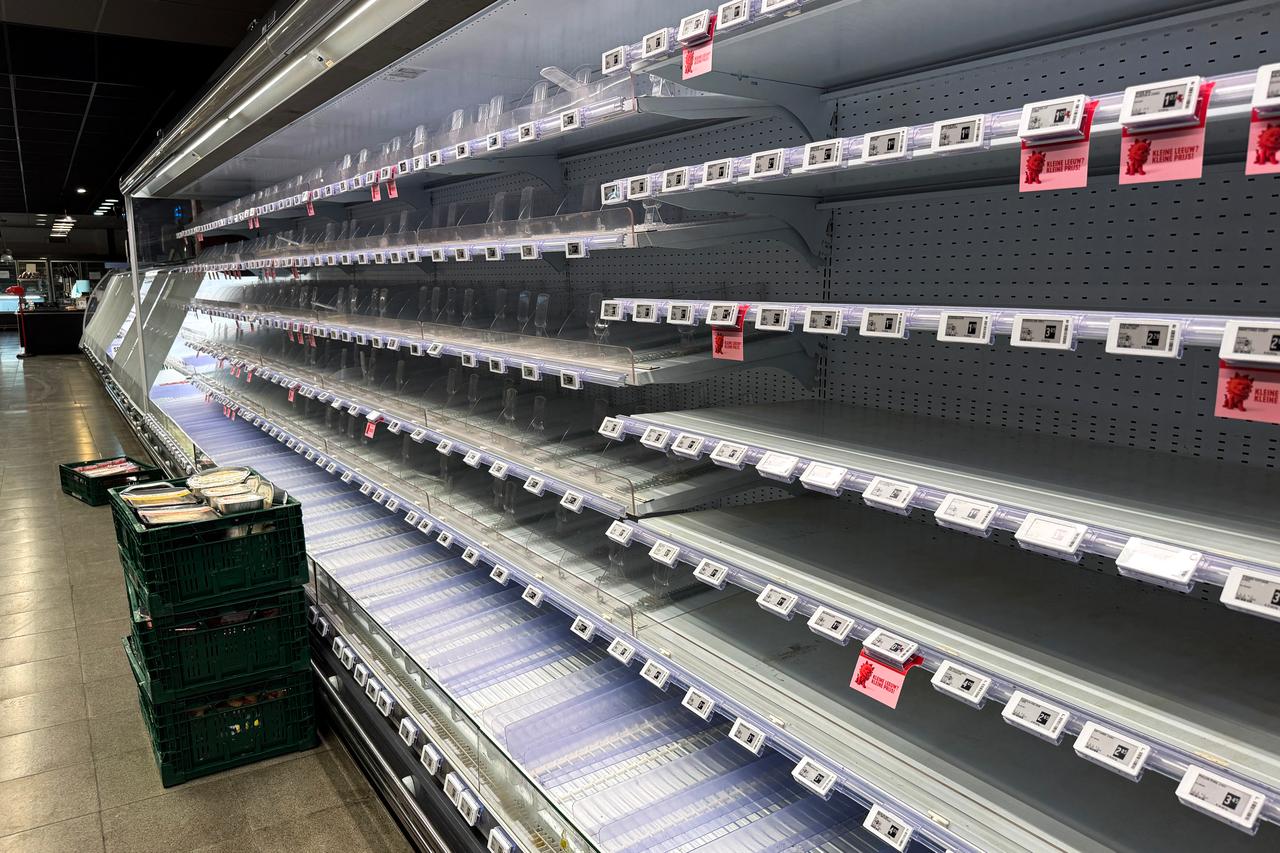
Photo: AFP via Türkiye Today (Empty refrigerators in a Delhaize supermarket in Belgium, 2 November 2026)
Hackers raised the temperature of supermarket fridges across Europe on Monday, spoiling tonnes of food and pushing the European Union to promise a joint response. By Tuesday, at least 11 countries had reported attacks, with Germany, Romania and the United Kingdom the latest to join the list.
The attack was simple in its method and wide in its reach. The hackers got into the remote systems that control refrigeration and turned the temperatures up. Food that should have stayed cold went warm overnight, and shops had to throw it away.
On Monday, problems were reported in nine EU countries: Belgium, Estonia, Finland, Ireland, Italy, Luxembourg, the Netherlands, Portugal and Sweden. On Tuesday, officials and company representatives said four supermarkets in Germany and six in Romania were also affected, and the UK reported attempts of its own.
Brussels is treating this as more than a string of local glitches. Thomas Regnier, a spokesperson for the EU, said the bloc's agencies were talking with national authorities to build a joint response. "These are not isolated incidents, and of course, we have to be collectively resilient and prepared for such cyber incidents," he said.
EU food and agriculture commissioner Christophe Hansen went further on Monday, calling the attacks a "deliberate attempt to disrupt our food supply chain". That is the language of a food security warning, not just a tech fault, and it explains why Italy held emergency talks with its intelligence chiefs on Tuesday.
Belgium was among the hardest hit. Dozens of stores across several grocery chains reported refrigeration failures, and federal prosecutors there have opened an investigation. Carrefour Belgium said about 15 of its 700 stores were disrupted, and Ikea said its outlet in Mons also saw freezer temperatures rise.
In Italy, about 20 supermarkets were affected. Giuseppe Spadaro, who runs a group of Coop supermarkets in Sicily, said four of its 300 stores were hit, causing thousands of euros in damage. "We had to throw away everything. The shelves are empty," he told Italy's Corriere della Sera newspaper. Prime Minister Giorgia Meloni's office later said the impact in Italy was "limited" and there was no cause for alarm, while adding that the relevant bodies remain on high alert.
The UK picture was smaller but telling. Hackers tried to target small meat-processing firms, but the impact was minimal, said Richard Horne, chief executive of the National Cyber Security Centre. He told the BBC the issue affected "the whole food supply chain" and that there had been a couple of instances where "vulnerable technology had been exploited". A day later, he warned the UK faces an "unprecedented rise" in cyber incidents in the coming months.
Sweden's Coop chain said refrigerators and freezers at seven of its stores were hit overnight. The affected equipment had been connected to "old 4G networks", a spokesperson said, and the stores have since resumed normal operations. Coop said it has sped up an upgrade, begun after the October attacks, to move its connected refrigeration equipment onto 5G networks and modern modems.
One name keeps coming up in the reports: Danfoss, a Danish maker of refrigeration controls whose systems were again among those targeted. The company said it had been in close contact with customers for the past three weeks and recommended that the systems not be directly accessible from the internet. Frank Groenewegen, a cybersecurity expert at Deloitte in The Hague, gave retailers blunt advice in comments carried by Al Jazeera: check whether refrigeration controllers are connected to the internet and running the latest security updates, and if shops do not even know, remove them from the public internet at once.
Put in plain terms, this is what happened. Many supermarket fridges are no longer just cold boxes. They are connected machines, controlled remotely over the internet so a head office can watch temperatures from far away. That convenience is also the weak point. If a hacker reaches that control system, they can turn the cold off without ever entering the shop.
The key figures so far read like this:
- Countries affected: at least 11, including Belgium, Estonia, Finland, Ireland, Italy, Luxembourg, the Netherlands, Portugal, Sweden, Germany, Romania and the UK
- Germany: four supermarket outlets affected, reported Tuesday
- Romania: six supermarket outlets affected, reported Tuesday
- Italy: about 20 supermarkets affected, including four Coop stores in Sicily
- Sweden: seven Coop stores hit, now back to normal operations
- Belgium: dozens of stores hit, with Carrefour reporting about 15 of its 700 stores disrupted
This is the second wave in a few weeks. It mirrored a cyberattack that swept hundreds of supermarkets across France in October, which also affected stores in several other European countries and forced hundreds of outlets to throw away spoiled stock. The same supplier's systems were targeted then too.
What is still not known matters as much as what is known. The motive is unknown, and no one has claimed responsibility. Romania's top cybersecurity official, Dan Cimpean, director of the National Cyber Security Directorate, played down the threat in comments to Al Jazeera, which first reported the latest EU warning. "It seems semi-amateurish," he said. "We do not suspect, under any circumstances, that it is a state actor." He added that no other infrastructure was compromised.
For readers in Pakistan, the story is a warning about how much of daily life now runs on connected systems, from cold storage to payments. A fridge, a shop, a warehouse or a delivery chain can be knocked over from a keyboard, and the cost shows up first in wasted food and higher prices, as this blog has covered in recent weeks with Sindh's wheat price cut and the expected fall in flour prices, petrol falling to Rs369.06 a litre and subsidised LPG at Rs300 to Rs350 per kilo for BISP families. Food, fuel and cooking gas are the costs that hit a monthly budget hardest, and a supply shock anywhere in the chain can travel fast. The same week also saw Greenland approve a US security deal after months of pressure from Washington, a reminder that European security debates are moving quickly on several fronts at once.
Sources
Al Jazeera: EU urges action as Germany, Romania and UK report supermarket cyberattacks
Türkiye Today (AFP): Suspected cyberattack knocks out supermarket fridges in 11 European countries
Watch for the EU's joint response and any claim of responsibility, which will show whether this was a one-off disruption or the start of a longer campaign against food supply chains.
#Cyberattack #Europe #Supermarkets #FoodSupply #EU #WorldNews #PakistanNews #BreakingNews


Comments
Post a Comment