Eisenkot Beats Netanyahu 67 to 46 in Race to Form Israel Government
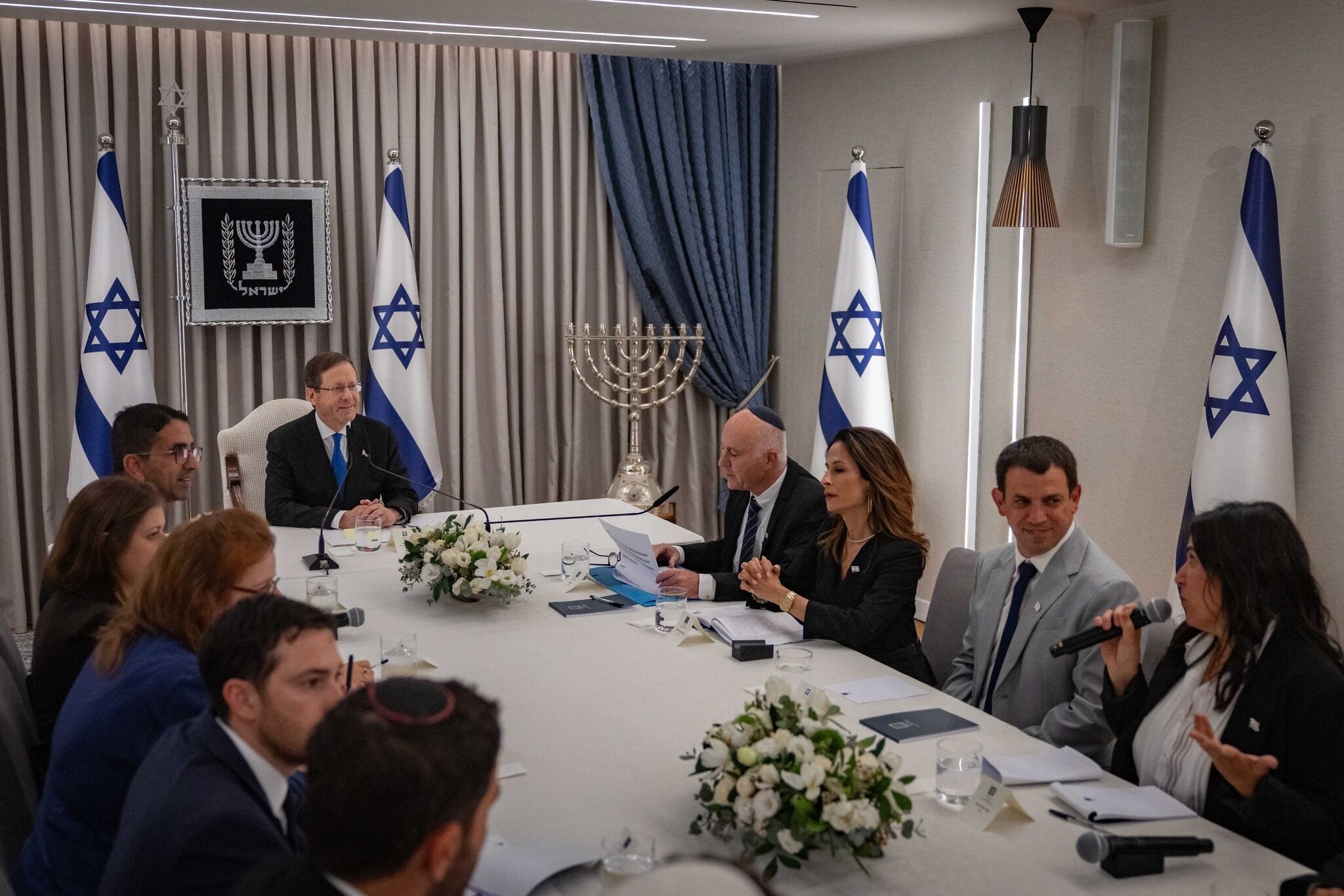
Photo: Yonatan Sindel/Pool via The Times of Israel
Gadi Eisenkot is now the clear favourite to become Israel's next prime minister. He won the backing of 67 of the 120 members of the Knesset, far ahead of Benjamin Netanyahu on 46. President Isaac Herzog will name the person to form the government on Sunday, and the big question now is whether Eisenkot can turn those recommendations into a coalition that actually works.
The numbers came out of two days of talks at the President's Residence in Jerusalem. Herzog met every party elected to the 26th Knesset in the election on 27 October, and asked each one who should get the first chance to form a government.
Eisenkot, who leads the Yashar party and used to run the Israeli army, picked up support from four Jewish-led opposition parties and both Arab-led parties. Together they gave him 67 recommendations, the most any candidate has received since 2015. Netanyahu, who has led Israel for most of the past 17 years, was recommended by 46 lawmakers. The seven members of United Torah Judaism, long one of his closest allies, refused to back either man.
But the headline number hides a harder truth. Only 48 of Eisenkot's 67 backers come from parties that are ready to sit together in a government. The other 19 come from Ra'am and the Joint List, the two Arab-led parties, and both have made it plain they are recommending him, not joining him. The Joint List has ruled out taking seats in his cabinet, though it could support a government from outside.
Eisenkot says he wants to build a national emergency government. He has set four conditions for any party that wants in, including recognising Hamas as a terrorist organisation. Ra'am leader Mansour Abbas has said his party supports the full disarmament of Hamas, one of those conditions.
Herzog himself sounded a note of caution. He said the result looked clear, but his job under the law is to work out who can actually form a government, and that is "not entirely clear, given the mutual vetoes between the blocs and within the blocs themselves". He will hold more private talks with party leaders over the weekend before he decides.
The political shake-up comes as tensions continue on the ground. This week Israeli settlers seized eight homes in Jericho, and settlers set fire to an olive grove near Ramallah. In the wider region, Turkiye's parliament has ratified a defence pact with Pakistan and Saudi Arabia.
The new Knesset is sworn in on 10 November, and one of its first jobs will be to elect a new speaker, which is expected to cost Likud the post. Whoever gets the mandate on Sunday will then have 28 days to put a government together, with a possible 14-day extension.
For Israelis, the vote on 27 October ended in a stalemate, with no bloc winning the 61 seats needed for a majority. Eisenkot's 67 recommendations show that a majority of lawmakers want Netanyahu out, but wanting him out and agreeing on what comes next are two different things. If he cannot bridge the gap between the Jewish opposition parties and the Arab parties, Israel could be heading for more deadlock, or even another election.
Sources
- The Times of Israel: Herzog says he will task a would-be PM on Sunday, after Eisenkot is recommended by 67 of 120 MKs
- The Jerusalem Post: Gadi Eisenkot set to receive mandate to form next Israeli government
- Haaretz: Eisenkot secures parliamentary majority, paving clearest path to forming government
- The Media Line: Eisenkot secures majority of endorsements as Israeli president weighs next government
Herzog names his choice on Sunday, and then the real test begins, as Eisenkot gets 28 days to build a government that can hold together.
#Israel #Eisenkot #Netanyahu #IsraelPolitics #MiddleEast #BreakingNews #WorldNews


Comments
Post a Comment