UN Votes 130 to 17 to Condemn US Embargo on Cuba as Support Falls to 20 Year Low
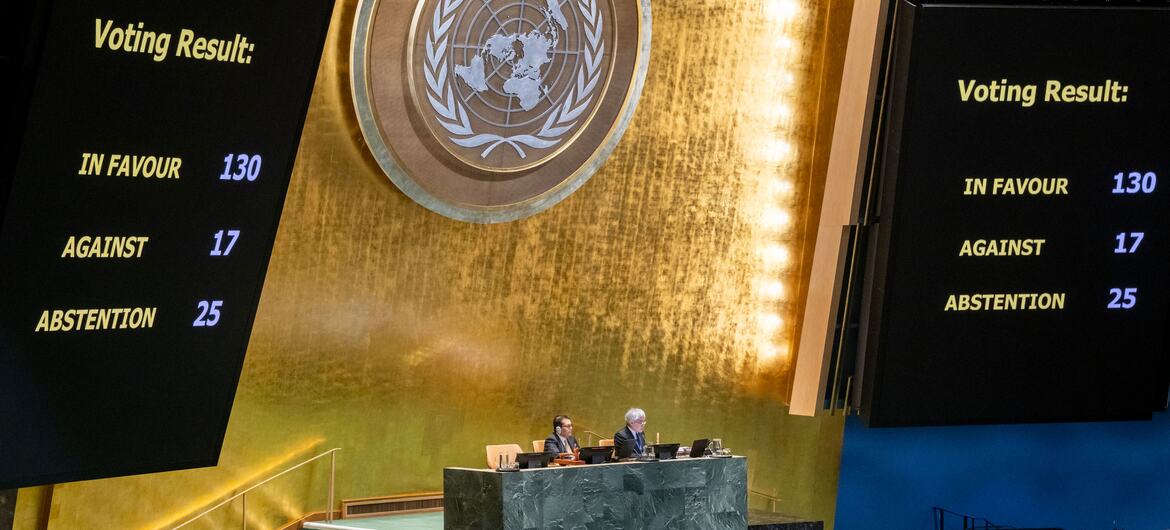
Photo: UN Photo
The United Nations General Assembly has voted 130 to 17 to condemn the United States embargo on Cuba, but support for the yearly resolution has fallen to its weakest level in 20 years. Twenty-five countries abstained, including Germany and Italy, which had backed the resolution in past years.
The result still leaves Washington in a clear minority at the UN, yet the shift in the numbers is the real story. A US lobbying push peeled away support, and the American envoy claimed afterwards that the tide was turning his way.
Main News Report: UN Votes 130 to 17 Against Cuba Embargo
UN News reported that the General Assembly called for the 34th time for an end to the US economic, commercial and financial embargo on Cuba. The text passed by 130 votes in favour, 17 against and 25 abstentions. Last year the same resolution passed by 165 votes to seven, with 12 abstentions.
Reuters reported that the countries voting against included the US and Israel, and that several Western countries abstained for the first time in many years. Germany and Italy were among them, along with Latvia, according to the Associated Press account of the vote.
Al Jazeera reported that the US had pushed hard to peel off support before the vote, and that Cuban officials accused Washington of threatening countries with tariffs, visa curbs and other penalties if they voted to condemn the embargo.
The resolution is not legally binding. Only the US Congress can lift the embargo, which has lasted for more than 60 years. But the yearly vote is widely read as a measure of world opinion, which is why both sides fight so hard over the numbers.
Background Context: 34 Years of Votes, and a Falling Tally
The Assembly first voted on this question in 1992, when 59 countries backed the resolution, three opposed it and 71 abstained. Support climbed over the years and peaked at 191 votes in 2015 and 2017, during and just after the thaw under President Barack Obama. In 2016 the US abstained for the first time.
Since then the trend has gone the other way. The resolution names the US 1996 Helms-Burton Act, whose reach extends beyond US borders and affects firms and people in other countries, and it urges states with similar laws to repeal them. It also says tougher measures applied since 2017 have undone the easing of 2015 and 2016.
The vote this year came as Cuba faces a severe energy crisis, made worse by a US fuel embargo that followed the rendition of Venezuela's president to New York. UN News linked that fuel squeeze directly to harder daily life across the island.
For context on other recent US moves at the UN and in the region, see our reports on US sanctions on Rwanda's defence ministry and the Qatar peace proposal handed to Iran. Another big global shift this week was Ethiopia's receipt of 12 Russian Su-35 fighter jets.
Reactions and Statements: Washington Claims Momentum, Havana Claims Isolation
US Ambassador Mike Waltz told reporters after the vote that he was satisfied so many countries, including major economies such as Germany and South Korea, had shifted their position. "Diplomacy takes time, but now that we have had a tripling of countries that have shifted, we expect that to only continue to grow," he said.
Waltz rejected the premise of the debate outright. "There is no blockade," he told delegates, pointing to more than $876 million in US exports to Cuba in the first eight months of 2026, plus shipments from Canada, Spain, Mexico, China, Russia, the European Union and UN agencies. He said Cuba's wealth had not vanished but had "changed hands" from ordinary Cubans to a ruling elite, which he accused of hoarding resources through a military-run business monopoly.
Cuban Foreign Minister Bruno Rodriguez answered with a running counter showing what he said the embargo had cost since the debate opened on Tuesday: more than $22.9 million. He blamed the embargo for strangling Cuba's health system, said infant mortality had doubled, and said tens of thousands of operations had been delayed or cancelled. Cancer medicines could not get in, he said, and Cuban-made treatments for Alzheimer's and dementia could not get out.
After the vote, Rodriguez wrote on X that the US was "once again isolated in its attempt to continue strangling the Cuban people" and that neither pressure nor "media circus" would prevail over the facts. Al Jazeera also reported that tensions boiled over on Tuesday, when Waltz and Rodriguez shouted at each other on the Assembly floor, and that Waltz said a Cuban diplomat would be expelled for assaulting an American diplomat.
Why This News Matters: A Number That Both Sides Will Quote
Both sides can claim a win from the same vote, and both will. Havana will point to 130 votes and say the world still condemns the embargo. Washington will point to the fall from 165 to 130, and the rise in abstentions from 12 to 25, and say its campaign is working.
The practical effect is limited in the short term, since the resolution cannot force Congress to act. But the numbers matter for Cuba's daily life: the embargo shapes what fuel, medicine and spare parts reach the island, and the energy crisis behind this vote is already biting.
The vote also shows how US pressure works in practice. Countries that once voted yes without a second thought are now weighing trade, visas and relations with Washington before they cast a ballot. That calculation, more than the resolution text, is what changed this year.
- Vote: 130 in favour, 17 against, 25 abstentions.
- Last year: 165 in favour, seven against, 12 abstentions.
- First vote, 1992: 59 in favour, three against, 71 abstentions.
- Peak support: 191 votes in 2015 and 2017.
- Against this year: The US and Israel among 17 countries.
- Abstained for the first time in years: Germany, Italy and Latvia.
Future Developments: What Happens Next on Cuba
The next test is not another UN vote, which will come again next year, but what Washington does next on fuel and trade. The Trump administration has already tightened energy restrictions, and Trump recently raised the prospect of US warships stopping in Cuba on their way back from the Iran war. Any fresh step on that front will draw a sharp Cuban response.
Watch too for whether more European countries drift from yes to abstain in next year's vote, and whether Havana's health and energy claims draw any formal UN follow-up. The embargo itself will only end through the US Congress, and there is no sign of that changing soon.
Sources
UN News: Backing for UN call to end Cuba embargo falls to 20-year low
Reuters: US gets more countries to oppose UN resolution condemning its Cuba embargo
Al Jazeera: UN votes to condemn embargo of Cuba despite US lobbying push
#Cuba #UN #USA #Embargo #WorldNews #BreakingNews #GlobalPolitics


Comments
Post a Comment